Free shipping for orders $80 up


Wait, don't go!
Before you leave, we have a special offer just for you!
Get 20% off your next purchase.
Before you leave, we have a special offer just for you!
Get 20% off your next purchase.


One of the first questions beginners ask before cracking open their first latch hook kit is: How long is this actually going to take? It’s a fair question — nobody wants to commit to a project that ends up sitting unfinished in a drawer for months. Whether you’re planning to make a latch hook rug, stitch up a cozy latch hook pillow, or supervise a latch hook kit for kids, timelines vary widely. This guide breaks it all down so you can set realistic expectations, plan your crafting sessions, and actually finish what you start.
Before diving into specific timeframes, it’s important to understand what variables are at play. Two people can open the same latch hook kit and finish weeks apart — here’s why.
The type of project you’re making has a huge impact on total time. A small latch hook pillow cover and a full-size latch hook rug are worlds apart in terms of effort. Canvas size is the most direct measure — the more square inches of canvas, the more individual knots you’re tying.
Latch hook canvases come in different mesh counts. A finer mesh means more holes per square inch and more knots overall. Standard latch hook canvas runs at about 3.75 holes per inch, but some specialty canvases used in premium latch hook kits are denser, which noticeably increases working time.
Beginners work significantly slower than seasoned crafters — and that’s completely normal. A beginner might take 2–3 minutes per knot as they find their rhythm, while an experienced latch hooker can complete a knot in under 30 seconds. This gap is especially relevant when a latch hook kit for kids is involved, as younger crafters naturally work at a slower, more exploratory pace.
Someone crafting for 30 minutes in the evenings will naturally take longer to finish than someone dedicating full weekend sessions. Your schedule matters enormously when estimating a finish date — whether it’s a latch hook rug you’re racing to finish before winter or a latch hook pillow you want done for the holidays.
A design with large blocks of a single color is much faster to work through than a highly detailed, multi-color pattern. Many popular latch hook kits for beginners are intentionally designed with bold, simple patterns to keep color-switching to a minimum — making them ideal for faster completion.
Most latch hook kits come with pre-cut yarn, which saves significant time. If you’re working from a standalone pattern and cutting your own yarn to length, factor in that prep work — it can add several hours to your total project time.
Here are honest, experience-based estimates for the most common latch hook projects. These are based on an average working pace — not rushing, not dawdling.
Project size: 8×8 to 10×12 inches
Estimated Time: 2 to 6 hours
Latch hook kits for kids are specifically designed to be quick, fun, and achievable. They typically feature simple shapes — animals, emojis, seasonal motifs — on small canvases with chunky yarn and wide-mesh grids that are easy for small hands to work with.
At a child’s working pace, a latch hook kit for kids can take anywhere from a single afternoon to a few short sessions spread over a week. For younger children (ages 6–9), expect more breaks and some adult guidance, which may stretch the timeline to 2 or 3 casual weekend sessions.
These kits are ideal for:
Project size: 10×10 to 14×14 inches
Estimated Time: 5 to 12 hours
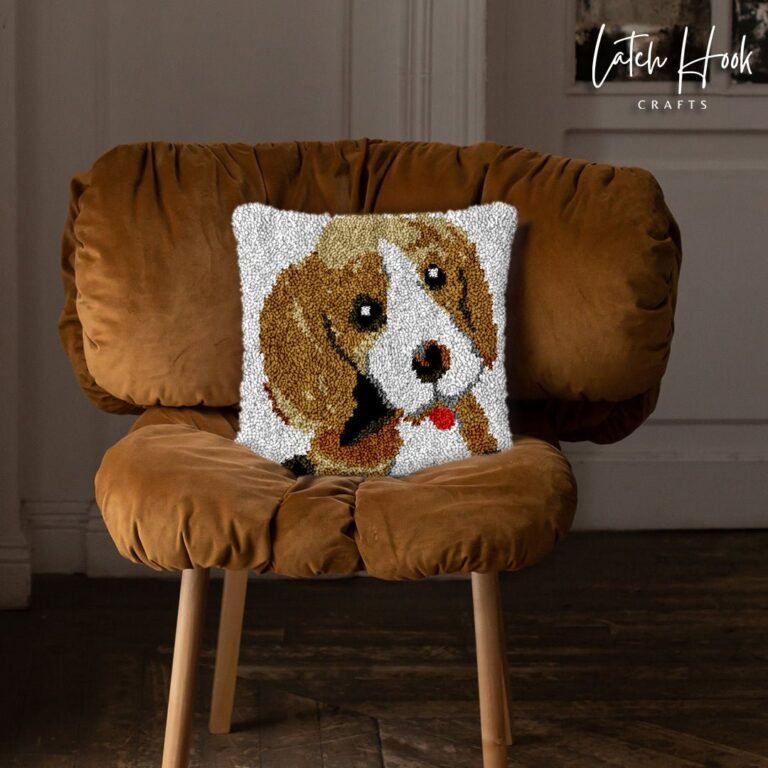
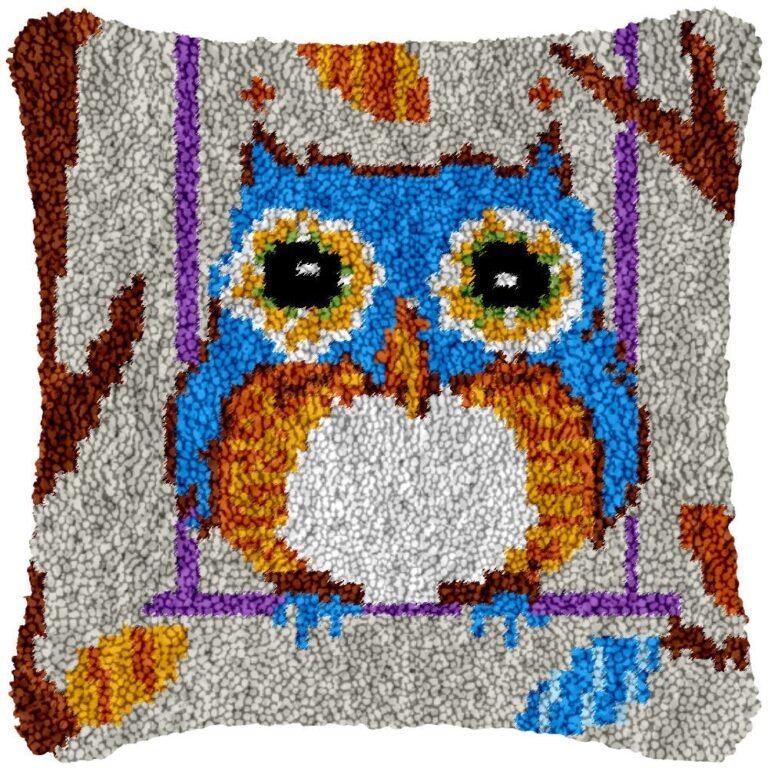
A latch hook pillow is one of the most satisfying entry-level projects for adults. The canvas is large enough to feel like a real accomplishment but small enough to finish within a couple of weeks of casual crafting. A simple latch hook pillow design with bold color blocks can be completed in as few as 5 hours by an intermediate crafter, while a more detailed pattern may take closer to 12 hours.
At 30–45 minutes per evening, most crafters complete a latch hook pillow in 2 to 4 weeks.
These projects are ideal for:
Project size: 16×20 to 20×27 inches
Estimated Time: 15 to 35 hours
This is the most popular size range across latch hook kits available today. Medium projects include small latch hook rugs, decorative wall hangings, and larger latch hook pillow covers. At a relaxed pace of about one hour per day, expect to finish in roughly 3 to 5 weeks.
Weekend-only crafters working 3 hours on Saturday and Sunday should plan for 6 to 10 weeks from start to finish.
These projects are ideal for:
Project size: 24×36 to 30×40 inches
Estimated Time: 40 to 80+ hours
Full-size latch hook rugs are where the craft gets serious. These are statement pieces — floor rugs, large wall hangings, heirloom-quality projects — and they require a real time commitment. At 1 hour per day, a large latch hook rug takes anywhere from 6 weeks to 3 months to complete.
Many crafters underestimate this and lose steam halfway through. Going in with honest expectations — and breaking the latch hook rug into mental sections — is the key to seeing it through.
These projects are ideal for:
Project size: 30×50 inches and above
Estimated Time: 80 to 200+ hours
Extra-large custom latch hook rugs — floor pieces, full wall tapestries, oversized statement rugs — are the marathon of the craft world. These are passion projects that may take 3 to 6 months or longer, depending on your daily commitment.
If you’re tackling one of these, set weekly knot-count goals rather than trying to pin down a finish date. The journey is half the point.
| Project Type | Total Hours | Casual Pace (1hr/day) | Weekend Pace (3hr×2 days) |
| Latch Hook Kit for Kids (8×10 in) | 2–6 hrs | 3–6 days | 1 week |
| Latch Hook Pillow (10×14 in) | 5–12 hrs | 1–2 weeks | 2–3 weeks |
| Medium Latch Hook Kit (20×27 in) | 15–35 hrs | 3–5 weeks | 5–8 weeks |
| Large Latch Hook Rug (24×36 in) | 40–80 hrs | 6–11 weeks | 7–14 weeks |
| Extra-Large Latch Hook Rug (30×50 in+) | 80–200+ hrs | 3–7 months | 3–8 months |
Getting specific about knot speed helps you estimate timelines far more accurately — especially if you’ve already started a latch hook kit and want to forecast your finish date.
A standard medium latch hook rug canvas (20×27 inches) contains roughly 2,025 individual knots. At a beginner pace of 50 knots per hour, that’s about 40 hours of work. At an experienced pace of 150 knots per hour, the same canvas takes only 13 to 14 hours. Experience makes an enormous difference.
You don’t need to rush — but a few smart habits can meaningfully cut down your project time, whether you’re working on a latch hook pillow, a latch hook rug, or helping a child through a latch hook kit for kids.
Spend 20–30 minutes upfront sorting all pre-cut yarn from your latch hook kit into color groups stored in labeled bags. The time saved during the project, not hunting for the right color, more than compensates for this prep work.
Complete all knots of one color in a section before switching to the next. This reduces interruptions, builds rhythm, and is especially effective on latch hook rugs with large repeat patterns. Most experienced crafters cite this as the single biggest time-saving habit they developed.
A cheap or worn-down tool makes the job harder and slower. A comfortable, ergonomic latch hook with a smooth latch mechanism reduces fumbling and hand fatigue — meaning longer, more productive sessions. This applies even to latch hook kits for kids: a tool that fits a child’s hand makes the experience much more enjoyable.
Use a latch hook frame or gripper strips to keep your canvas flat and taut. A canvas that slides or bunches up wastes time and disrupts your flow — particularly frustrating when you’re deep into a large latch hook rug.
Rather than tracking time, track knots. A goal of 100–200 knots per session gives you a concrete daily target and a visible sense of progress — critical for staying motivated on long latch hook rug projects.
Use this simple formula for any latch hook kit:
Step 1 — Count your total knots: Canvas width × canvas height × holes per inch² = total knots (Example: 20 × 27 × 14.06 ≈ 7,592 knots)
Step 2 — Measure your personal knot speed: Knot for 10 minutes and multiply your count by 6.
Step 3 — Calculate total hours: Total knots ÷ your hourly knot rate = total hours
Step 4 — Project your finish date: Total hours ÷ weekly crafting hours = weeks to finish
This works for any project — from a quick latch hook pillow to a sprawling latch hook rug — and gives you a realistic target to work toward.
A latch hook kit for kids presents a unique challenge: keeping younger crafters motivated long enough to actually finish. Here are a few strategies that work:
Whether you’re a parent helping a child through their first latch hook kit for kids, a beginner stitching your first latch hook pillow, or an experienced crafter tackling a statement latch hook rug, knowing your realistic timeline before you start makes all the difference.
Go in with honest expectations, set up good daily habits, and remember: every knot you tie is visible, permanent progress toward something genuinely beautiful. The question isn’t really how long it takes — it’s whether you enjoy the journey enough to keep going.One of the first questions beginners ask before cracking open their first latch hook kit is: How long is this actually going to take? It’s a fair question — nobody wants to commit to a project that ends up sitting unfinished in a drawer for months. Whether you’re planning to make a latch hook rug, stitch up a cozy latch hook pillow, or supervise a latch hook kit for kids, timelines vary widely. This guide breaks it all down so you can set realistic expectations, plan your crafting sessions, and actually finish what you start.
Before diving into specific timeframes, it’s important to understand what variables are at play. Two people can open the same latch hook kit and finish weeks apart — here’s why.
The type of project you’re making has a huge impact on total time. A small latch hook pillow cover and a full-size latch hook rug are worlds apart in terms of effort. Canvas size is the most direct measure — the more square inches of canvas, the more individual knots you’re tying.
Latch hook canvases come in different mesh counts. A finer mesh means more holes per square inch and more knots overall. Standard latch hook canvas runs at about 3.75 holes per inch, but some specialty canvases used in premium latch hook kits are denser, which noticeably increases working time.
Beginners work significantly slower than seasoned crafters — and that’s completely normal. A beginner might take 2–3 minutes per knot as they find their rhythm, while an experienced latch hooker can complete a knot in under 30 seconds. This gap is especially relevant when a latch hook kit for kids is involved, as younger crafters naturally work at a slower, more exploratory pace.
Someone crafting for 30 minutes in the evenings will naturally take longer to finish than someone dedicating full weekend sessions. Your schedule matters enormously when estimating a finish date — whether it’s a latch hook rug you’re racing to finish before winter or a latch hook pillow you want done for the holidays.
A design with large blocks of a single color is much faster to work through than a highly detailed, multi-color pattern. Many popular latch hook kits for beginners are intentionally designed with bold, simple patterns to keep color-switching to a minimum — making them ideal for faster completion.
Most latch hook kits come with pre-cut yarn, which saves significant time. If you’re working from a standalone pattern and cutting your own yarn to length, factor in that prep work — it can add several hours to your total project time.
Here are honest, experience-based estimates for the most common latch hook projects. These are based on an average working pace — not rushing, not dawdling.
Project size: 8×8 to 10×12 inches
Estimated Time: 2 to 6 hours
Latch hook kits for kids are specifically designed to be quick, fun, and achievable. They typically feature simple shapes — animals, emojis, seasonal motifs — on small canvases with chunky yarn and wide-mesh grids that are easy for small hands to work with.
At a child’s working pace, a latch hook kit for kids can take anywhere from a single afternoon to a few short sessions spread over a week. For younger children (ages 6–9), expect more breaks and some adult guidance, which may stretch the timeline to 2 or 3 casual weekend sessions.
These kits are ideal for:
Project size: 10×10 to 14×14 inches
Estimated Time: 5 to 12 hours
A latch hook pillow is one of the most satisfying entry-level projects for adults. The canvas is large enough to feel like a real accomplishment but small enough to finish within a couple of weeks of casual crafting. A simple latch hook pillow design with bold color blocks can be completed in as few as 5 hours by an intermediate crafter, while a more detailed pattern may take closer to 12 hours.
At 30–45 minutes per evening, most crafters complete a latch hook pillow in 2 to 4 weeks.
These projects are ideal for:
Project size: 16×20 to 20×27 inches
Estimated Time: 15 to 35 hours
This is the most popular size range across latch hook kits available today. Medium projects include small latch hook rugs, decorative wall hangings, and larger latch hook pillow covers. At a relaxed pace of about one hour per day, expect to finish in roughly 3 to 5 weeks.
Weekend-only crafters working 3 hours on Saturday and Sunday should plan for 6 to 10 weeks from start to finish.
These projects are ideal for:
Project size: 24×36 to 30×40 inches
Estimated Time: 40 to 80+ hours
Full-size latch hook rugs are where the craft gets serious. These are statement pieces — floor rugs, large wall hangings, heirloom-quality projects — and they require a real time commitment. At 1 hour per day, a large latch hook rug takes anywhere from 6 weeks to 3 months to complete.
Many crafters underestimate this and lose steam halfway through. Going in with honest expectations — and breaking the latch hook rug into mental sections — is the key to seeing it through.
These projects are ideal for:
Project size: 30×50 inches and above
Estimated Time: 80 to 200+ hours
Extra-large custom latch hook rugs — floor pieces, full wall tapestries, oversized statement rugs — are the marathon of the craft world. These are passion projects that may take 3 to 6 months or longer, depending on your daily commitment.
If you’re tackling one of these, set weekly knot-count goals rather than trying to pin down a finish date. The journey is half the point.
| Project Type | Total Hours | Casual Pace (1hr/day) | Weekend Pace (3hr×2 days) |
| Latch Hook Kit for Kids (8×10 in) | 2–6 hrs | 3–6 days | 1 week |
| Latch Hook Pillow (10×14 in) | 5–12 hrs | 1–2 weeks | 2–3 weeks |
| Medium Latch Hook Kit (20×27 in) | 15–35 hrs | 3–5 weeks | 5–8 weeks |
| Large Latch Hook Rug (24×36 in) | 40–80 hrs | 6–11 weeks | 7–14 weeks |
| Extra-Large Latch Hook Rug (30×50 in+) | 80–200+ hrs | 3–7 months | 3–8 months |
Getting specific about knot speed helps you estimate timelines far more accurately — especially if you’ve already started a latch hook kit and want to forecast your finish date.
A standard medium latch hook rug canvas (20×27 inches) contains roughly 2,025 individual knots. At a beginner pace of 50 knots per hour, that’s about 40 hours of work. At an experienced pace of 150 knots per hour, the same canvas takes only 13 to 14 hours. Experience makes an enormous difference.
You don’t need to rush — but a few smart habits can meaningfully cut down your project time, whether you’re working on a latch hook pillow, a latch hook rug, or helping a child through a latch hook kit for kids.
Spend 20–30 minutes upfront sorting all pre-cut yarn from your latch hook kit into color groups stored in labeled bags. The time saved during the project, not hunting for the right color, more than compensates for this prep work.
Complete all knots of one color in a section before switching to the next. This reduces interruptions, builds rhythm, and is especially effective on latch hook rugs with large repeat patterns. Most experienced crafters cite this as the single biggest time-saving habit they developed.
A cheap or worn-down tool makes the job harder and slower. A comfortable, ergonomic latch hook with a smooth latch mechanism reduces fumbling and hand fatigue — meaning longer, more productive sessions. This applies even to latch hook kits for kids: a tool that fits a child’s hand makes the experience much more enjoyable.
Use a latch hook frame or gripper strips to keep your canvas flat and taut. A canvas that slides or bunches up wastes time and disrupts your flow — particularly frustrating when you’re deep into a large latch hook rug.
Rather than tracking time, track knots. A goal of 100–200 knots per session gives you a concrete daily target and a visible sense of progress — critical for staying motivated on long latch hook rug projects.
Use this simple formula for any latch hook kit:
Step 1 — Count your total knots: Canvas width × canvas height × holes per inch² = total knots (Example: 20 × 27 × 14.06 ≈ 7,592 knots)
Step 2 — Measure your personal knot speed: Knot for 10 minutes and multiply your count by 6.
Step 3 — Calculate total hours: Total knots ÷ your hourly knot rate = total hours
Step 4 — Project your finish date: Total hours ÷ weekly crafting hours = weeks to finish
This works for any project — from a quick latch hook pillow to a sprawling latch hook rug — and gives you a realistic target to work toward.
A latch hook kit for kids presents a unique challenge: keeping younger crafters motivated long enough to actually finish. Here are a few strategies that work:
Whether you’re a parent helping a child through their first latch hook kit for kids, a beginner stitching your first latch hook pillow, or an experienced crafter tackling a statement latch hook rug, knowing your realistic timeline before you start makes all the difference.
Go in with honest expectations, set up good daily habits, and remember: every knot you tie is visible, permanent progress toward something genuinely beautiful. The question isn’t really how long it takes — it’s whether you enjoy the journey enough to keep going.